CoSpiN “Coherent Networks for Neuromorphic Computing” funded by the ERC
Roadmap on spin-wave computing
Check out this comprehensive description of recent developments and trends in magnonic computing.
Nanoscaled Magnonic Networks
Our view of the building blocks for magnetic components and their assembly on the chip.
Our way to detect magnons: Brillouin light scattering microscopy
Spin waves, the elementary low energy excitations of an ordered spin system, and their bosonic quanta, magnons, carry energy and angular momentum in the form of spin. The field of magnonics aims to create devices for sensing, data processing and logic which are based on spin waves and their outstanding properties like intrinsic nonlinearity and nanometer wavelengths at GHz frequencies.
Our scientific aim is to explore and combine emerging physical phenomena which can be used to realise novel magnonic hybrid systems with novel and superior characteristics. We have a particular focus on:
- Nonlinear spin-wave phenomena in micro- and nanostructures
- Nanoscaled magnonic devices for unconventional data processing
- Novel materials for magnonics including low-damping Heuler compounds
- Hybrid systems combining magnonics with spintronic and phononic systems
- Amplification and control of coherent spin-waves in micro-and nanostructures using parametric processes
- Nonreciprocal magnonic systems based on dipole-dipole and DMI interactions
To achieve our goals, we investigate magnonics systems experimentally by Brillouin light scattering spectroscopy and inductive techniques. To study and optimize magnonic systems before fabrication, we employ massively parallelized micromagnetic simulations. These simulations are run and analysed by our home-made AITHERICON software platform with the aim to use artificial intelligence, neural networks and inverse design methods to create magnonic systems with designed and superior properties for wave-based transport and data processing.







News
SELECTED RECENT PUBLICATIONS AND ACCEPTED SUBMISSIONS
Link to FULL PUBLICATION LIST
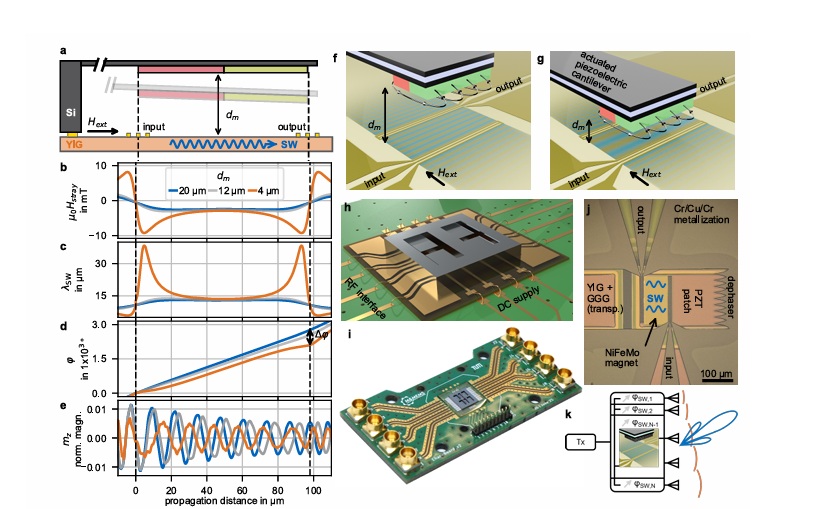
- Microscaled Tunable Magnonic RF Phase ShiftersJohannes Greil, Antonio Angotti, Felix Kohl, Ádám Papp, Matthias Wagner, Maria Cocconcelli, Andrea Del Giacco, Dieter Ferling, Björn Heinz, Federico Maspero, György Csaba, Riccardo Bertacco, Markus Becherer, Philipp PirroarXiv.2606.14280
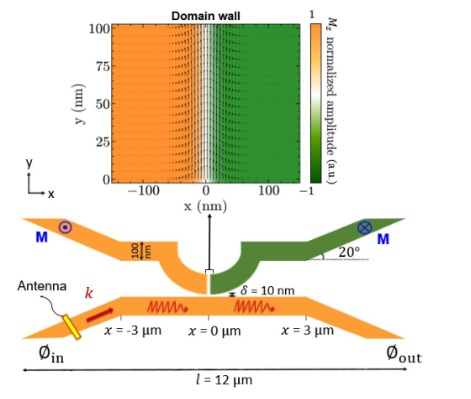
- Spin-wave phase modulation using magnetic domain walls in dipolarly coupled structures for non-volatile magnonic computationH. Mortada, P. Pirro, A. Hamadeh Appl. Phys. Lett. 128, 232401 (2026)arXiv.2606.03336
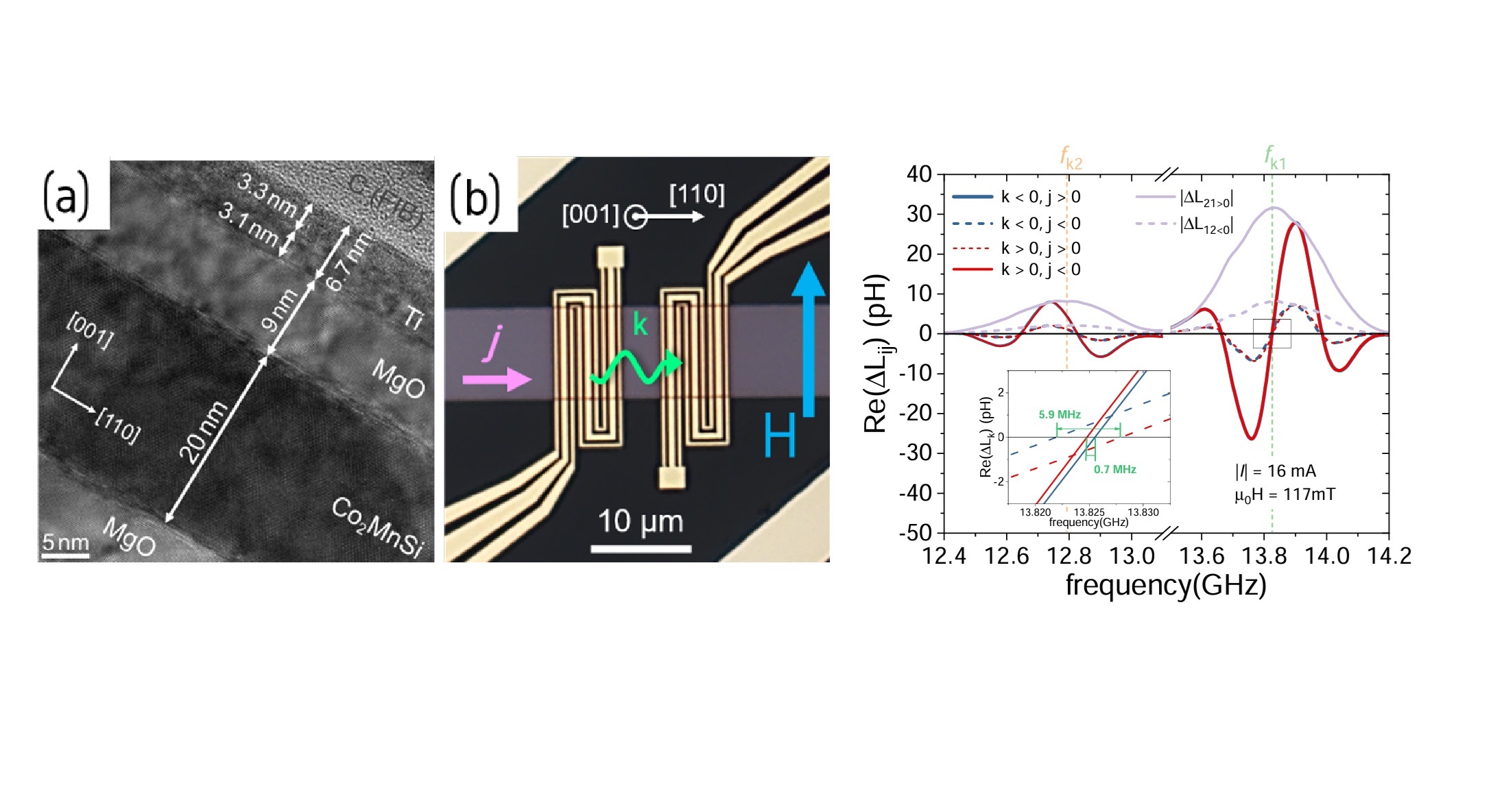
- Spin-polarization of the electric current in half-metallic Co2MnSi Heusler thin filmsJosé Solano Córdova, Anna Maria Friedel, Quentin Rossi, Jérôme Robert, Yves Henry, Philipp Pirro, Sébastien Petit-Watelot, Stéphane Andrieu, Matthieu BailleularXiv.2606.04598
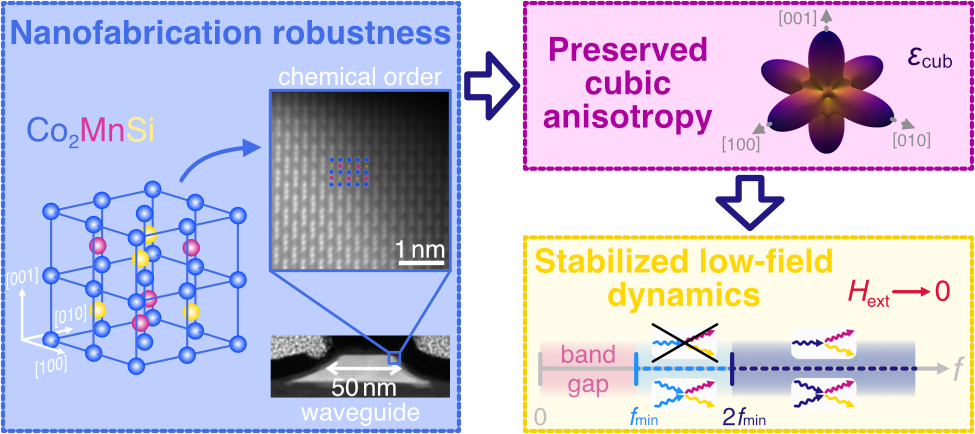
- Epitaxial Co2MnSi with intrinsic magnetocrystalline anisotropy as a route to bias-field-free nonlinear half-metal magnonics at the nanoscaleAnna Maria Friedel, Jaafar Ghanbaja, Björn Heinz, Moritz Bechberger, Sylvie Migot, Sébastien Petit-Watelot, Stéphane Andrieu, Philipp PirroarXiv.2606.03431
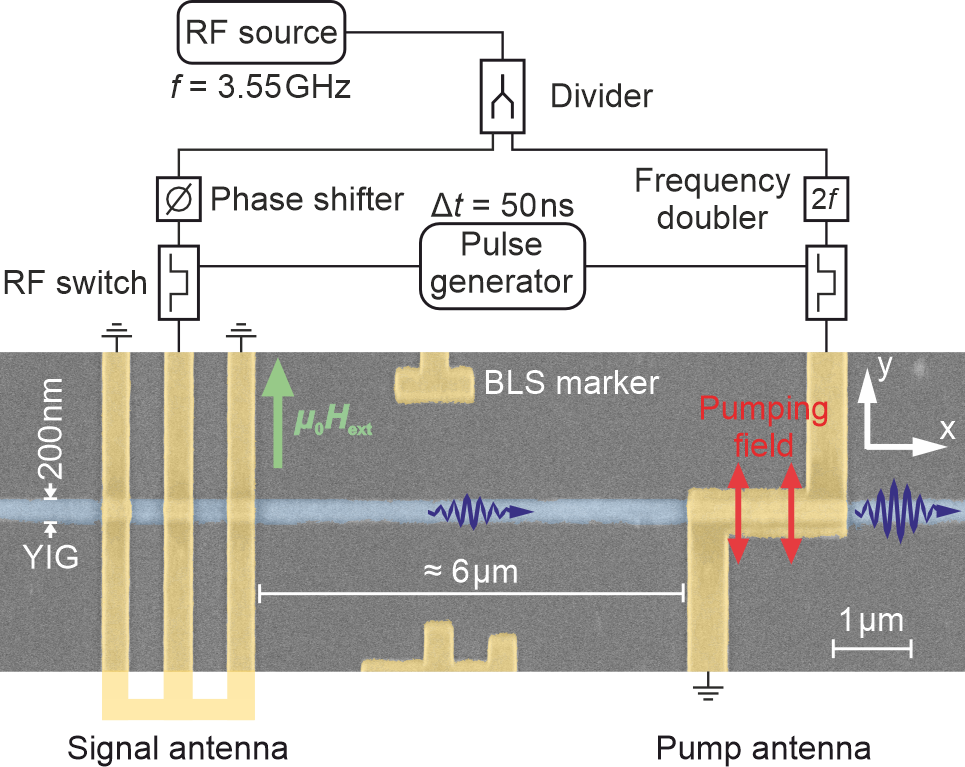
- Phase-dependent parametric amplification of propagating spin waves in YIG nanostructures enabled by local inhomogeneitiesAkira Lentfert, Ephraim Spindler, Björn Heinz, Mathias Weiler, Philipp Pirro2606.02139